When a Hospital Bed Isn’t the Answer: What Home Nursing Really Looks Like
There is a particular kind of relief that comes with hearing “you can go home now.” And a particular kind of dread that follows it, when the person being discharged still needs a catheter changed, a wound dressed, or vitals checked twice a day. Families in Dubai are increasingly discovering that the choice is not between a hospital room and managing alone. Home nursing services at home have quietly become the middle path that a lot of people did not know existed until they needed it.
What Home Nursing Actually Means
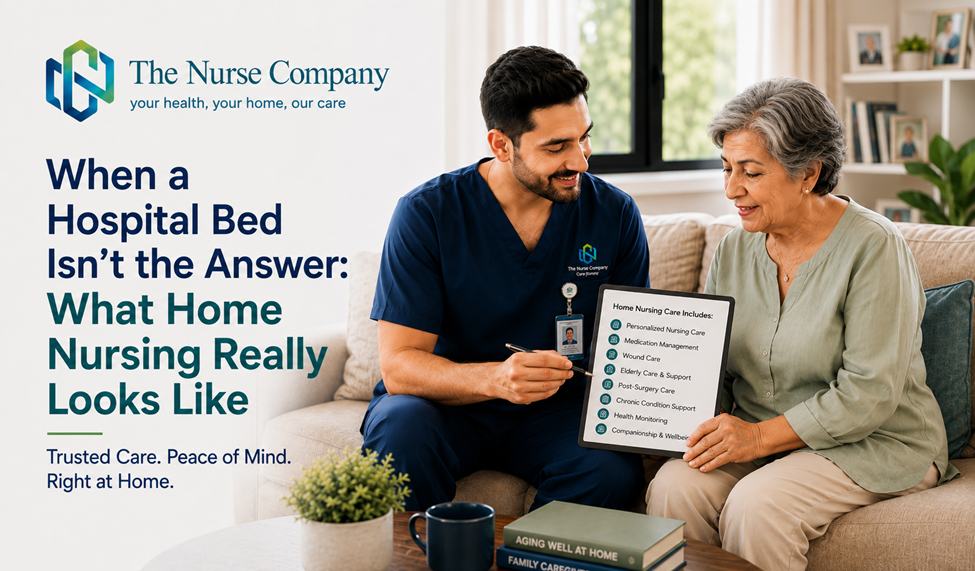
The phrase gets used loosely, so it helps to be specific. Home nursing is not a caregiver who helps with meals and company, though that has its place too. It is licensed clinical care delivered wherever the patient lives, by nurses trained to handle the same tasks they would perform on a hospital floor.
That can mean wound care after surgery, IV therapy, injections, catheter management, tracheostomy care, or monitoring for a chronic condition like diabetes or heart failure. It can also mean postpartum support for a new mother, physiotherapy sessions for someone recovering from a stroke, or round-the-clock care for an elderly parent whose mobility has declined.
The common thread is that a trained nurse, not a general assistant, is the one doing it. In the UAE, that distinction matters legally too. Providers offering genuine home nursing services at home should be licensed by the Dubai Health Authority, and the nurses themselves should hold valid DHA credentials.
Why Families Are Choosing This Route
A few things are driving the shift. Hospital stays are expensive, and insurers in the region are increasingly willing to cover home-based recovery once a patient is stable enough to leave. Recovery also tends to go better in familiar surroundings. Sleep is easier, stress is lower, and family members can stay involved in care decisions instead of watching from a waiting room.
There is also the reality of aging parents. Many families in Dubai are caring for elderly relatives who have their own home, their own routines, and no interest in moving into a facility. Bringing a nurse to them, rather than the other way around, respects that.
And for some conditions, ongoing home nursing simply prevents repeat hospital visits. A nurse who checks a diabetic patient’s blood sugar and foot condition weekly can catch problems long before they become an emergency room trip.
What a Typical Setup Looks Like
Most home nursing arrangements start with an assessment. A nurse or care coordinator visits the home, reviews the patient’s medical history and current condition, and works out what kind of support is actually needed. This matters because needs vary enormously. Some patients need a nurse for forty minutes a day to manage medication and dressing changes. Others need someone present around the clock.
From there, a care plan gets built, usually in coordination with the patient’s treating doctor. Visit frequency, the specific tasks involved, and the qualifications of the assigned nurse should all be documented clearly. Good providers reassess regularly rather than locking a family into a fixed plan that no longer fits as the patient’s condition changes.
Pricing usually depends on the level of care and how often visits happen. A short daily visit for medication management costs far less than living in nursing for a bedridden patient. It is worth asking providers for a clear breakdown before committing, since some services bundle in things like equipment rental or transport that others charge separately.
Questions Worth Asking Before You Choose
Not every service billed as home nursing is equipped to handle complex medical needs. Before signing on with a provider, a few questions tend to separate the serious operators from the rest.
Is the agency licensed by the Dubai Health Authority, and can they show it? Are the individual nurses DHA registered, not just the company? What happens if a nurse is sick or unavailable on short notice? Is there a backup? How does the provider communicate with the patient’s doctor if something changes? And what is the actual process if a medical emergency happens during a home visit?
A provider that answers these clearly and without hesitation is usually one that has done this many times before.
Recovery That Fits Around Real Life
The appeal of home nursing services at home is fairly simple once you sit with it. It lets people heal, age, or manage illness in the place that is actually theirs, with the people who actually know them, without giving up the level of clinical care a hospital would provide. That combination did not really exist as a mainstream option a decade ago, and now it does.
The Nurse Company works with DHA-certified nurses across Dubai to deliver exactly this kind of care, from postnatal support to elderly care and post-surgical recovery, tailored to what each patient actually needs rather than a one-size-fits-all package.
If someone in your family is facing a hospital discharge, a long recovery, or simply needs more support at home than you can provide alone, it is worth having the conversation about what home nursing could look like for them, before the decision gets made for you in a moment of crisis.