Cardiac Arrest, Heart Attack or Stroke? Knowing the Difference Can Save a Life
The three terms get used as if they mean the same thing. They do not, and in the first few minutes, the difference decides what a bystander should do. Here is a plain guide to telling them apart and responding well.
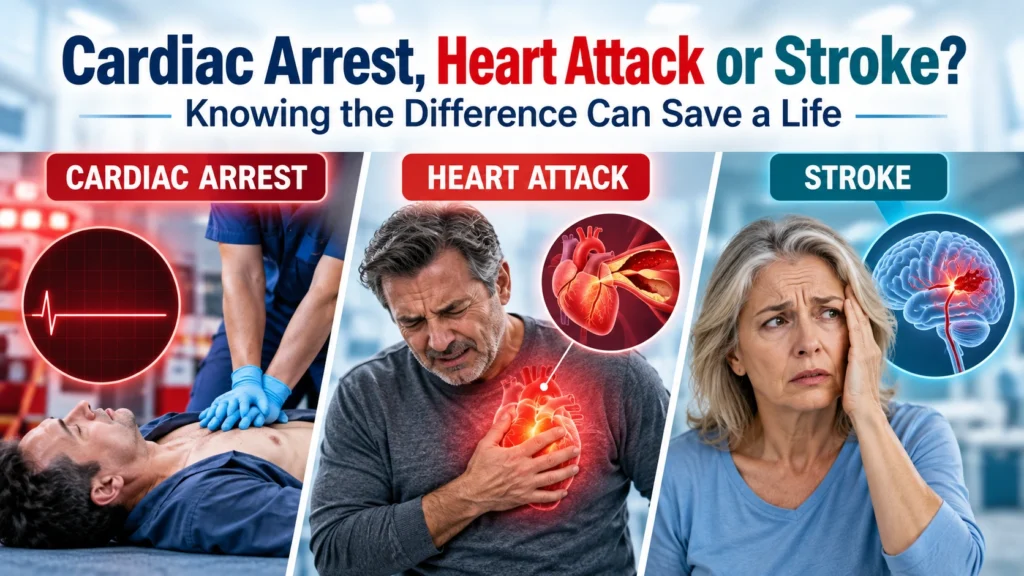
What is the Difference Between Cardiac Arrest, a Heart Attack and a Stroke?
A heart attack is a plumbing problem. A coronary artery becomes blocked, and part of the heart muscle is starved of oxygen. The person is usually awake, often in pain, and may be sweating, breathless or nauseous.
A cardiac arrest is an electrical problem. The heart’s rhythm becomes chaotic or stops, and the heart can no longer pump blood. The person collapses, does not respond and is not breathing normally. A heart attack may sometimes lead to cardiac arrest, but many arrests happen without warning.
A stroke is a brain problem. Blood flow to part of the brain is clogged by a clot or disrupted by bleeding. The person is often awake but may have a drooping face, a weak arm or slurred speech.
If Someone Collapses: Think Cardiac Arrest
If a person collapses and is not responding or breathing normally, assume cardiac arrest. Call 998, put the phone on speaker and start chest compressions straight away. Push hard and fast in the centre of the chest, at 100 to 120 compressions a minute, letting the chest rise fully between pushes. Do not worry about rescue breaths if you are untrained; hands-only CPR still helps.
Send someone to find an automated external defibrillator (AED). Many malls, offices, airports and gyms in Dubai have them. Switch it on and follow the voice instructions; it will only deliver a shock if one is needed. Without CPR, the chance of survival falls with every minute, so early action by bystanders makes a real difference.
If the Face, Arm or Speech Changes: Think Stroke
Use the BE FAST check: Balance loss, Eyes (sudden vision change), Face drooping, Arm weakness, Speech difficulty, time to call 998. Note the exact time symptoms started, or the last time the person was seen well. That single detail shapes which treatments are possible.
Do not give food, drink or medicines, including aspirin, because some strokes are caused by bleeding.
If there is Chest Pain: Think Heart Attack
Call 998, keep the person seated and calm, and follow the dispatcher’s advice, which may include chewing an aspirin if they are not allergic.
What Happens at Hospital
For stroke, a CT or MRI scan quickly shows whether it is caused by a clot or a bleed. Clot-dissolving medicine can be given within a limited window, generally up to four and a half hours from onset, and selected patients with large clots may have them removed by catheter.
After a cardiac arrest, survivors need intensive care. The team supports blood pressure and breathing, protects the brain, and looks for the cause. Coronary angiography is often performed at top hospitals in Dubai for cardiac treatment because a blocked artery is a frequent trigger. Some patients later receive an implantable defibrillator.
Preventing the Next One
Survivors of all three emergencies share many risk factors: high blood pressure, high cholesterol, diabetes, smoking and inactivity. Atrial fibrillation, an irregular heart rhythm, is a major cause of stroke and is often treatable with blood thinners. Follow-up care, rehabilitation, and long-term medicines reduce the chance of a repeat event.
Why rankings are not the point
Lists of the leading heart hospitals in Dubai compare many things, but in these emergencies only a few matter: how quickly an emergency department can be reached, and whether it can scan, treat and admit to intensive care around the clock. Knowing which hospitals near you offer stroke & cardiac arrest treatment in Dubai is more useful than any league table. In practice, the ambulance crew will take the patient to the nearest suitable hospital.
Which Dubai Hospitals Manage Cardiac Arrest and Stroke?
One is Aster Hospitals, a hospital group with Dubai locations that include Muhaisnah, Al Qusais, Mankhool and Aster Cedars Hospital in Jebel Ali. Its 24/7 emergency and critical cardiac care covers the management of cardiac arrest and stroke as well as emergency heart attack treatment, supported by intensive care and coronary care units, rapid diagnostics and critical care teams.
Pacemaker and ICD implantation and cardiac rehabilitation are available for patients recovering from a cardiac event. The most valuable preparation costs nothing: learn CPR, save 998 in your phone, and know where the nearest AED is at work.