How to Transfer Company Ownership in Dubai: Documents, Approvals and Next Steps
Selling a stake in a Dubai company, bringing in a new partner or handing over a business entirely can look like a matter of agreeing a price and signing a contract. In practice, ownership only changes when the licensing authority updates its records, and a buyer who has paid but is not yet registered cannot act for the company. Understanding the approvals and paperwork involved helps both sides avoid frozen bank accounts and disputes later.
What an Ownership Transfer Involves
Transferring ownership means moving some or all of the shares in a licensed company from one shareholder to another. A partial transfer, such as a founder selling 40% to a new partner while remaining manager, leaves the company itself unchanged. A full sale moves every share and usually the management role as well. In both cases, the license number, contracts and liabilities stay with the legal entity, and the authority reissues the license and constitutional documents with updated shareholder details. A detailed guide on how to transfer company ownership in Dubai explains the process for both mainland and free zone companies.
Free Zone and Mainland Routes
The approving authority depends on where the company is licensed. In a free zone, the seller and buyer sign a share transfer agreement and submit it to the free zone authority, which reviews the incoming shareholder before issuing an amended license, share register and Memorandum and Articles of Association. Many free zones handle this largely online, and foreign ownership is permitted. Mainland companies in Dubai are licensed by the Department of Economy and Tourism (DET), and transfers generally require an amended memorandum of association, usually notarised. Foreign ownership on the mainland depends on the activity and current rules. Confirming the route before agreeing a timeline is important, because documents, approvals and costs differ.
Documents to Prepare
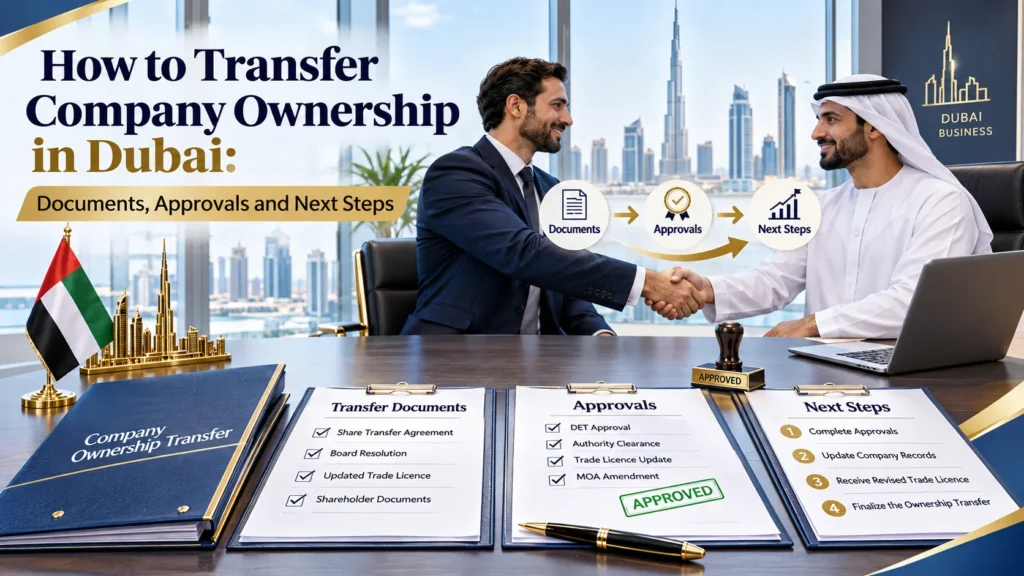
Most transfers need a signed share transfer agreement, a shareholder resolution approving the change, passport and Emirates ID copies for both parties, proof of address for the buyer, and the current share register and constitutional documents. Authorities may also carry out identity and source-of-funds checks on the incoming shareholder, who can be an individual or a company. Documents signed abroad usually require notarisation and attestation, and some may need Arabic translation. A buyer or seller outside the UAE can complete the process remotely or appoint a representative under a notarised power of attorney that clearly states the powers granted.
The Transfer Step by Step
The process typically runs in three stages. First, the parties agree price, payment terms and warranties, and settle outstanding obligations such as rent, visa costs and supplier balances; a clearance letter on pending dues is useful before signing. Second, they sign the transfer agreement and resolution and submit them to the licensing authority, responding promptly to any queries. Third, once the authority issues the amended license and records, the company updates its bank mandate, tax registrations and, where relevant, employee visas and contracts. Ownership and management are separate records, so manager and signatory details should be updated at the same time.
Beneficial Ownership, Banking and Tax
A share transfer often changes who the company’s beneficial owners are. Under Cabinet Decision No. 109 of 2023, companies must update their beneficial owner and shareholder registers and notify the registrar within 15 days of a change, and penalties for failing to do so are set by Cabinet Decision No. 132 of 2023. Banks will also require updated ownership and signatory documents, and often fresh know-your-customer checks, before restoring full account access. The company should update its Federal Tax Authority profile where corporate tax or VAT registration details are affected.
Risks to Address Before Signing
The main risks are undisclosed liabilities, unregistered side agreements, outdated bank mandates and unclear management authority. Due diligence on contracts, debts and compliance history, combined with warranties and indemnities in the agreement, protects the buyer. Releasing payment in stages as each authority update is completed, and agreeing a clear handover plan for bank access and records, protects both sides.
Conclusion
A company ownership transfer in Dubai takes effect at registration, not at the handshake. Confirming the jurisdiction, preparing complete documents and updating beneficial ownership, bank and tax records promptly keep the process on track. Companies licensed through free zones such as Meydan Free Zone should check their authority’s transfer requirements and fees before agreeing a sale timeline with a buyer.